Real Work. Real Results.
On jobsites around the world, AIM-enabled machines are doing production work around the clock, making adverse environments safe and efficient.
Explore real projects
AIM Autonomous Site Operations
Autonomy that runs the whole site—not just the machine.
AIM's Site Operating System coordinates the entire operation—not just individual machines. It continuously learns from production, balances work across mixed fleets, and optimizes output in real time. The result is site-wide operational leverage: quantified economic gains and zero-injury safety, delivered with a production retrofit of the machines you already have.
$6.1M
annual OpEx savings from a single six-machine autonomous fleet
+500%
increase in fleet production in high-utilization operations
$37M
additional ore value unlocked per mining operation
0
injuries across harsh mine sites since 2021
Autonomous Machines for Mining
Maximize mine site safety and productivity
AIM has been hard at work across harsh mine sites since 2021, with zero injuries.
Existing fleets of ground engaging machines are retrofit to run at maximum duty cycle, while former operators take on safe roles as site managers with AI leverage.
Autonomous Machines for Mining
Maximize mine site safety and productivity
AIM has been hard at work across harsh mine sites since 2021, with zero injuries.
Existing fleets of ground engaging machines are retrofit to run at maximum duty cycle, while former operators take on safe roles as site managers with AI leverage.
“
The OCP Group, the world's leading phosphate miner and phosphate fertilizer producer has been leveraging AIM's technology. OCP & InnovX teams have been working with AIM since 2024 to bring autonomy and automation to their next-generation mine sites. Initial piloting has been successful and the teams are now expanding project scope."
Abhiram KannanPrincipal at Bidra, OCP's corporate venture fund

Supercharge Production
The Biggest Opportunity in Heavy Construction and Mining Isn't More Machines—It's More Value From the Ones You Already Own.
Every fleet has untapped safety and economic potential. Zero injuries. Higher utilization. Lower unit costs. Faster project delivery. Reduced fuel consumption and machine wear. Less rework. Safe, consistent and predictable operations.
AIM autonomy unlocks these gains and delivers quantified business results. For example, customer analysis shows a six-machine autonomous fleet can deliver up to $6.1M in annual OpEx savings, reduce cost per yard moved by up to 23%, increase fleet production by more than 500%, and unlock over $37M in additional ore value in high-utilization mining operations.
Discover how autonomy is helping heavy construction and mining leaders capture millions in fleet-level value. All with a production retrofit of the machines you already have.
See why mining leaders are embracing automation with aim
Independent benchmark detail · full methodology in the whitepaper
Up to104%
Hourly cost saving (at 6-machine fleet scale supervised by one operator)
23%
Reduction in cost per yard moved (At full fleet scale in high-utilization model)
Autonomous Machines for Construction
Take on more work
Around the world, construction sites are being shaped night and day by AIM-enabled heavy equipment.
By retrofitting fleets with AIM's universally compatible tech, construction companies are unlocking new levels of safety and productivity to meet timelines, maximize profitability, and optimize their workforce.
Autonomous Machines for Construction
Take on more work
Around the world, construction sites are being shaped night and day by AIM-enabled heavy equipment.
By retrofitting fleets with AIM's universally compatible tech, construction companies are unlocking new levels of safety and productivity to meet timelines, maximize profitability, and optimize their workforce.
$1.5M
in annual savings per 12-machine fleet
2.2%
fuel savings beyond manual operation (in benchmark study)
0
injuries
“
Autonomous machines are an obvious unlock for dangerous industries like mining and construction. We backed AIM because of their strong team, technical approach, and early traction with customers. AI-powered heavy equipment will improve safety and productivity, and open the door to bigger breakthroughs in creating abundance of critical materials and resources throughout the world."
Sven StrohbandKhosla Ventures

Autonomous Machines for Defense
Unlock new levels of safety for combat operations with AIM
In conditions that stop people, like chemical, radiation, arctic, and desert environments, autonomous vehicles powered with AIM thrive.
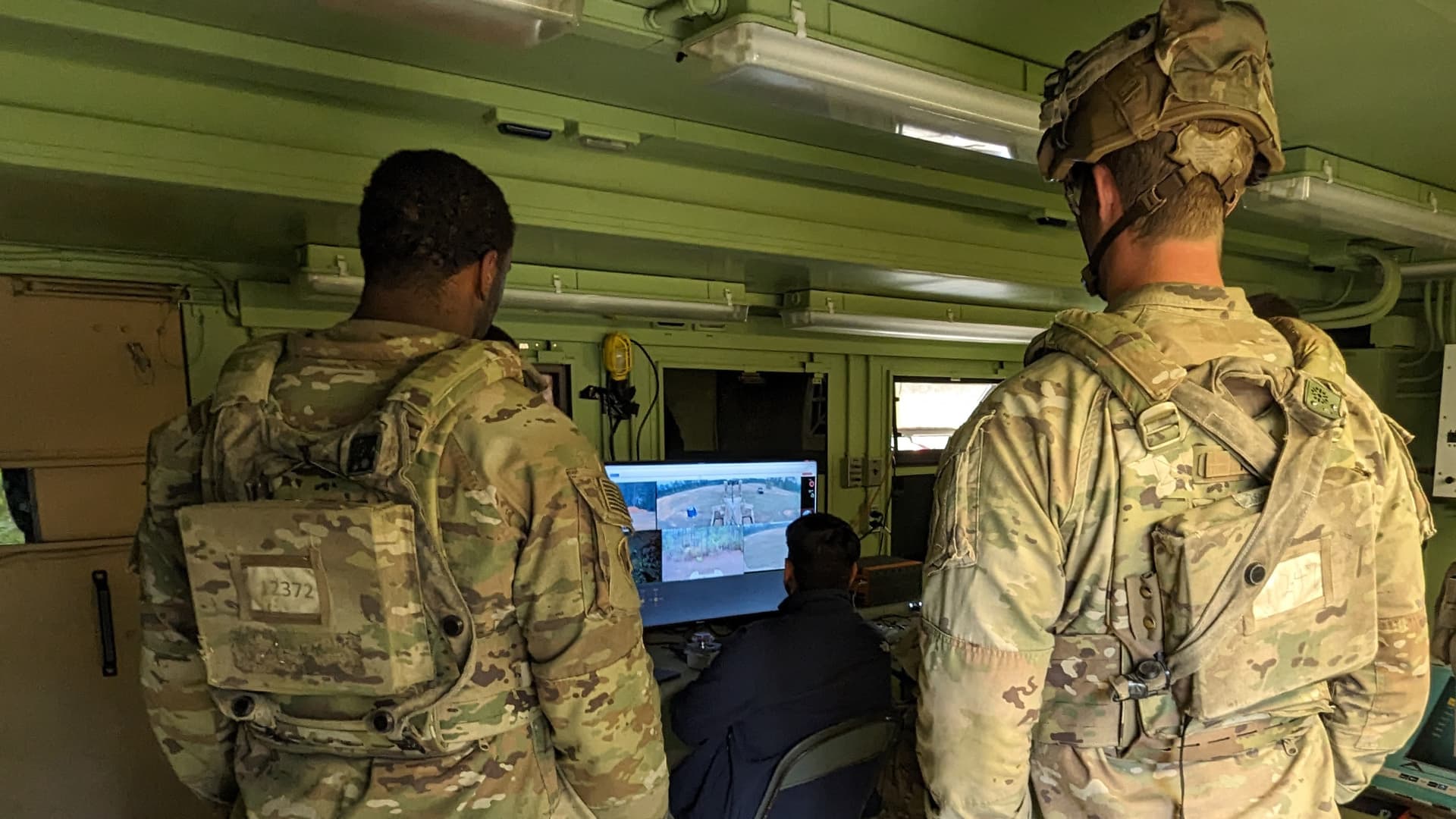
Built in partnership with military leaders, AIM-equipped DoW machines are safely conducting operations like mine clearing, building critical infrastructure, and shaping complex, adversarial terrain.
Autonomous Machines for Defense
Unlock new levels of safety for combat operations with AIM
In conditions that stop people, like chemical, radiation, arctic, and desert environments, autonomous vehicles powered with AIM thrive.
Built in partnership with military leaders, AIM-equipped DoW machines are safely conducting operations like mine clearing, building critical infrastructure, and shaping complex, adversarial terrain.

OCONUS
Construction
airstrips, defensive positions, bases

Minefield
Neutralization
Large-scale explosive hazard mitigation

Airfield
Recovery
Rapid Damage assessment and repair
“
Why the heck would you send a manned system when you can send an autonomous system to make that repair without placing soldiers unnecessarily in the line of fire?"
H.R. McMasterU.S. Army Lieutenant General (Ret.)
The Layers of Autonomy
The Question Isn't Which Machine Wins. It's Which Site.
AIM operates in the blue zone: the top layer of autonomy, where the entire site is optimized as one system. It's the only layer where leverage compounds across every machine and operator at once.
AIM Autonomous Site Operations
The entire site runs as a single intelligent production system. Former operators become fleet managers, guidance systems and autonomous equipment work in concert, and production is balanced across the whole operation in real time. The leverage is site-wide: what used to take 12 people now takes a single site manager.
Historically, this is how sites have operated—at progressively lower leverage. Each layer below automates a single machine or assists one operator at a time, while site-wide coordination still falls back on people.
Machine Automation
Individual machines can complete specific tasks autonomously while adapting to their immediate environment. Learning exists at the machine level, improving the performance of individual assets, but overall fleet and site-level coordination still depends on people.
Operator-Assisted Operations
Digital tools such as grade control, machine guidance, and remote operation may improve precision and productivity while giving operators better information. The operator remains ultimately responsible for everything, like in manual operations. Safety for the operator removed from the cab may be improved with tele-operation, but because of decreased visibility via cameras, overall site safety risks remain high. The operator-assist program doesn't learn and adapt from experience and is bound to make the same error repeatedly until an engineer updates the underlying code.
Manual Site Operations
Every production action and decision depends on people, down to each joystick movement by human hand. The superintendent, operators, radios, hand signals, and whiteboards coordinate the work. As production increases, coordination complexity increases with it. Safety exposure is as large as it gets.
Full comparison across every layer